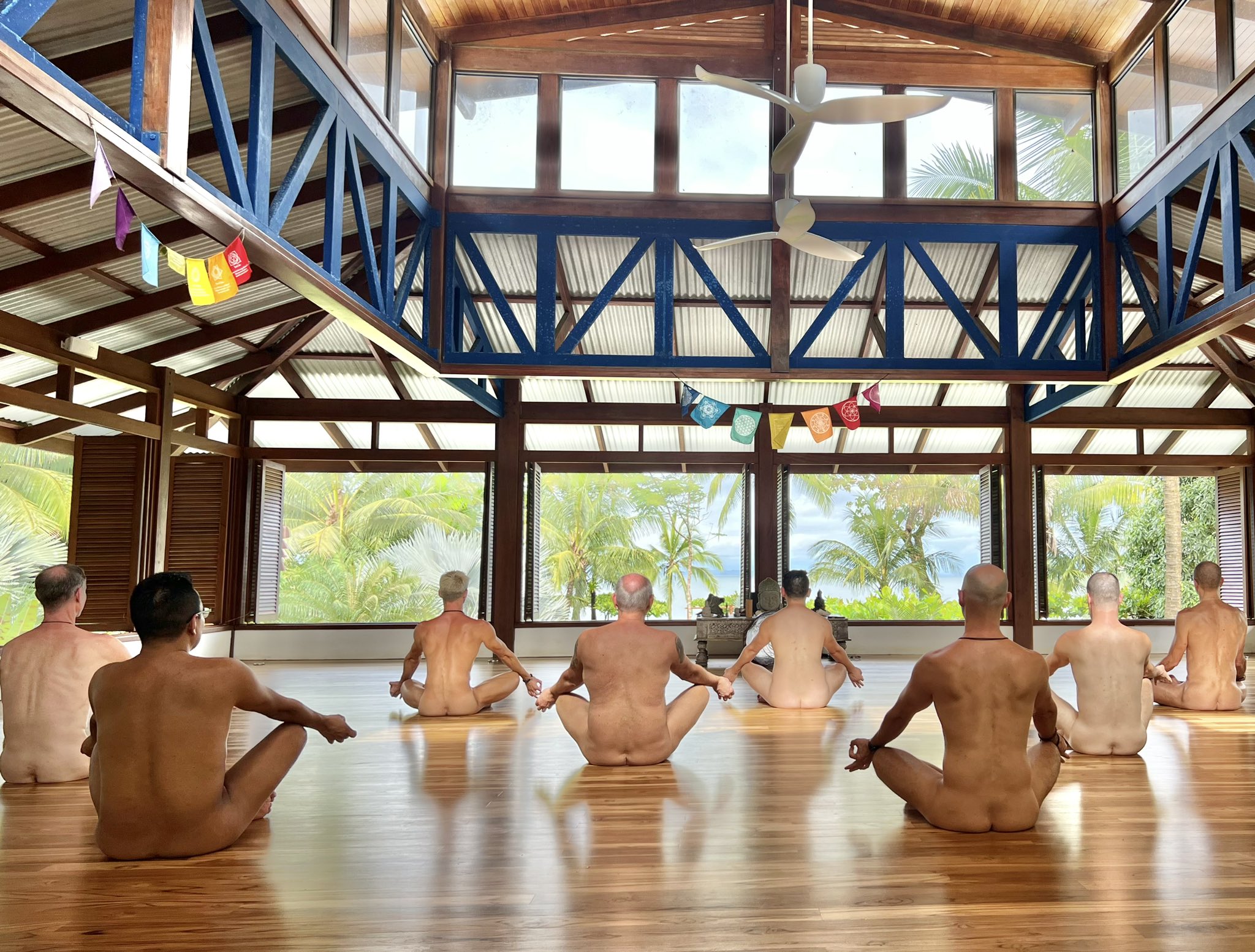
Guest post by Men’s Natural Yoga Photo: Men’s Natural Yoga
Embracing Vulnerability as a Path to Liberation
In yogic traditions, personal transformation begins with surrendering the ego. Communal nudity is an extension of this principle, allowing practitioners to detach from external validations tied to clothing and appearance. Similar to practicing Pratyahara (withdrawal of the senses), this experience cultivates inner awareness rather than external distractions.
Strengthening the Practice of Non-Judgment
Yoga promotes Ahimsa (non-harming) and Satya (truthfulness), encouraging practitioners to approach others without judgment. In a communal nudity setting, these philosophies flourish as individuals embrace themselves and others with compassion, rather than societal conditioning that dictates unattainable beauty standards. The shared experience fosters mutual understanding and acceptance, key elements of yoga’s ethical foundation.
Deepening the Connection to Breath and Body
Breath (Pranayama) is the bridge between mind and body, guiding practitioners toward presence and relaxation. Without the restriction of clothing, individuals may feel a heightened sense of awareness, experiencing their movements more organically in poses (asanas) and breathwork. This unfiltered embodiment parallels yoga’s intention to harmonize movement and mindfulness.
Cultivating Trust and Energy Flow
Practicing in a shared space without barriers creates an amplified energy exchange, much like when individuals move in sync during partner yoga or group meditation. Brahmacharya (right use of energy) teaches practitioners to channel their life force wisely, whether in movement or stillness. When communal nudity is approached with mindfulness, it reinforces trust, removes self-consciousness, and supports deeper energetic connection within a group.
A Gateway to Self-Confidence and Inner Peace
Yoga ultimately aims for Samadhi (blissful awareness), where the practitioner embraces their full essence without attachment. Communal nudity can be a step toward this freedom—liberating individuals from insecurities and encouraging confidence in their body as it is. By shedding external layers, practitioners can move closer to a state of inner peace and self-acceptance.
Conclusion: Nudity as a Yogic Practice of Authenticity
Yoga is about authenticity, presence, and acceptance—principles that align beautifully with communal nudity when practiced mindfully. While this experience may not resonate with everyone, approaching it from a yogic mindset reinforces self-compassion, deep trust, and the liberation of ego-driven attachments. Whether clothed or unclothed, yoga ultimately invites individuals to embrace their true selves.
Follow Men’s Natural Yoga on BlueSky Web site – Men’s Natural Yoga
##mensnaturalyoga ##nudeyoga ##publicnudity #Yoga
You may also like
 Naked (nagna) yoga it’s a thing
 Benefits of nude yoga practice
 Asana of the week – Mountain Pose